The history of the Barisha Chandi puja is long and beautiful. It began in the year 1200 of the Bengali calendar, in the month of Magh. Mahesh Chandra Roy Chowdhury of the Sabarna Roy Chowdhury family initiated the sacred tradition, and the origin itself felt miraculous.
Legend held that a massive banyan tree stood near the old tank at Chandi Maath. When workers tried to cut it, a red liquid flowed from the trunk, which resembled blood. Fear gripped everyone, and work stopped immediately. That night, Mahesh Chandra had a vivid dream in which the Goddess revealed that her ghot was hidden inside the tank. The next morning, villagers cast a net and found the ghot where it was mentioned. This discovery marked the inception of Barisha Chandi Puja.
Advertisement
Deborshi RoyChowdhury, reflecting on the enduring legacy of the festival, stated: “Chandi puja was not just a ritual, it carried the devotion and history our ancestors had.”
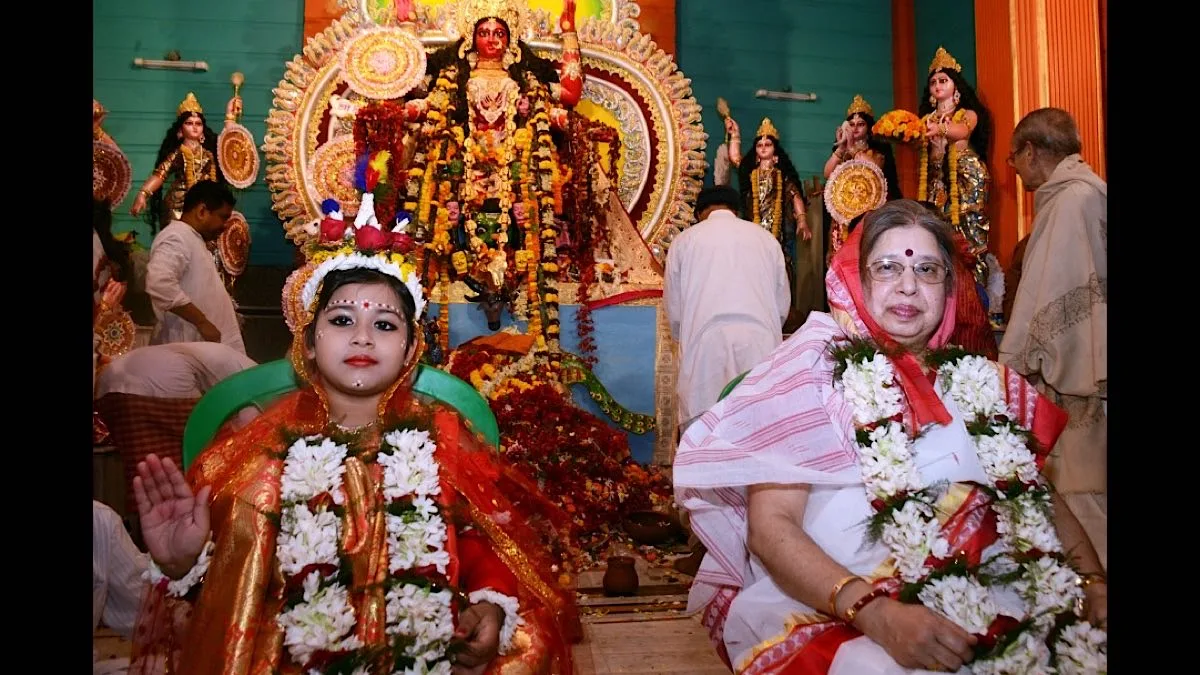
Mahesh Chandra had also envisioned the Goddess herself in the dream. Scholars from Bhatpara assisted him in bringing this vision to life. The idol depicts Goddess Chandi seated on a panchamundi asana, her radiant red body adorned with four hands. They represent blessings, protection, boons and a rosary. Three eyes glimmered with wisdom, and eight companions surrounded her. A chandi mandap was built beside Mahesh Chandra’s home, and the puja began with overwhelming devotion.
In the early days, offerings were in the form of goats, buffaloes, sugarcane and pumpkins. With time, as the old temple weakened and zamindari power declined, the puja nearly vanished. Yet, the people of Barisha refused to relinquish their sacred duty. Members of the Sabarna family, along with the local youth, kept the tradition alive. After more than a century, it had evolved into a community festival, which is enlivened by yatra, kabigan and other performances. Previously, they used to light up the fair, though these performances no longer take place nowadays. Modern touches like jalebi stalls, chaat counters and bright game booths fill the grounds, yet they still carry the same warmth, nostalgia and emotional connection that people cherish nowadays.
Over the decades, all forms of animal sacrifice ended. The buffalo sacrifice stopped first because of Nanda Dulal Roy Chowdhury’s advocacy. By 1972, all blood offerings had come to an end. The present temple was rebuilt with funds from charity shows by the Nimai Jatra group and was decorated with stone and sandstone to preserve the grandeur.
The fair itself evolves alongside the rituals. The wooden puppet became the soul, performed with love by the family of Nishikanta Purkait from Raspunja for generations. Stalls gradually grew from humble beginnings to modern food, toys, bamboo crafts and eventually a wooden Ferris wheel, horse rides and contemporary games. Yet the heart of the fair remained warm and traditional.
A member of the Chandi Puja committee focusing on the importance of communal participation said: “Our goal was to connect every visitor to the heritage of Chandi puja.”
Rituals were deeply spiritual. The Kumari Puja, celebrating the goddess in young girls, was performed with elaborate chants, floral offerings and a heart full of respect and kindness for the goddess. Intricate rites, dhak rhythms and shennai melodies marked Ashtami, Navami and Dashami. The final ended in a grand procession, where the idol was carried reverently and immersed in the Ganga alongside fireworks and devotional songs. Blood donation camps and charitable initiatives were even organised, which reflect the combination of devotion and social responsibility of the festival.
This year, the fair was held from 27 November to 7 December 2025. The inauguration took place on 27 November at 7 PM. Ashtami rituals were held on 28 November, Navami on 29 November, and Dashami fell on 30 November. The fair concluded on 7 December. These ten days brought the community together, filling every heart with pride, joy and devotion.
During these days, lights sparkled across every corner, the aroma of festive delicacies filled the air, and the laughter of children mingled with the sacred sounds of rituals. Wooden rides, puppet shows and modern stalls coexisted, combining nostalgia and royalty. The elderly guided, the youth laboured tirelessly, and the children danced with joy. The festival felt like one grand family gathering, honouring the goddess and the continuity of heritage.
The story of the sacred ghot, the divine dream and the eternal presence of Goddess Chandi continues inspiring generations. It reminds us all that those who attended that tradition and faith were timeless treasures.